All blog
Health
Dec 20, 2025
6 Min read

Account Health
Amazon Seller Account Management: A Safe-Scaling Blueprint for Sellers
With Amazon facing a $30 million lawsuit, sellers are in the spotlight. Discover why protecting your account and inventory is more critical than ever.
TL;DR
The goal of Amazon Seller Account Management is to safeguard and grow a high-risk digital asset. Founders become the bottleneck as sellers expand, and selecting the incorrect management may result in policy infractions, suspensions, or unnecessary advertising expenditures. This guide breaks down management models, real costs, security risks, and how to scale safely—while keeping control.
The safest sellers don’t outsource blindly—they install independent monitoring.
Amazon Seller Account Management Services
Amazon Seller Account Management is no longer a convenience—it’s a risk decision.
As Amazon businesses scale, sellers face a compounding problem: operational complexity increases faster than revenue clarity. Inventory planning, advertising spend, compliance checks, customer service, and policy updates all compete for attention inside Seller Central.
At this stage, founders aren’t just managing growth—they’re protecting a high-risk digital asset. One missed policy update, suppressed listing, or unmanaged advertising leak can stall momentum or trigger account restrictions overnight.
Amazon Seller Account Management Services exist to solve this exact problem. But not all management models reduce risk equally. Some create new vulnerabilities by removing visibility, control, or accountability.
Consider David, a private-label car vendor earning $40,000 a month. While battling a fraudulent A-to-Z claim, he was so worn out and overwhelmed that he overlooked a crucial resupply limit update. He is afraid of losing control to the wrong partner, yet he still wants to scale.
In this guide, we will walk alongside David to decode the Amazon Management ecosystem. Explain what Amazon Seller Account Management actually includes, how different service models compare, what it realistically costs, and how sellers can scale without exposing their account to avoidable suspension or profit erosion.
Before you give anyone access to your Seller Central, start a free 30-day trial of ave7LIFT to establish a safety baseline before you outsource operations.

1. What Are Amazon Seller Account Management Services?
For David, the breaking point wasn’t a drop in sales; it was a realization. He spent 40 hours last week managing ApexAuto, but only two of those hours were spent on "Growth"—finding new suppliers or negotiating better margins. The other 38 hours were spent fighting "fires": answering buyer messages, reconciling lost inventory, and staring at a suppressed listing.
This is where Amazon Seller Account Management comes into play. So what does Amazon Seller Account Management actually include?
These services are not just "outsourcing admin tasks." At their core, they are about Asset Protection and Scalability. Professional management bridges the gap between daily operations and long-term strategy, handling everything from Amazon Business customer services to logistics.
Why Invest In Professional Management To Scale Your Store?
Operational Efficiency (The "Time" Buy-Back): A professional manager takes over the "unbillable" hours. For David, this means handing off inventory reconciliation and Amazon seller customer services. Instead of waking up to check if a shipment arrived, he wakes up to a report confirming it’s live.
Strategic Advantages (The "Brain" Buy-Back): Amazon’s algorithm changes weekly. Dedicated Amazon managers manage dozens of accounts. They know before David does that a new "Fee Adjustment" is coming or that a specific keyword strategy is no longer working.
Understanding The Ecosystem: Seller Central vs. Vendor Central
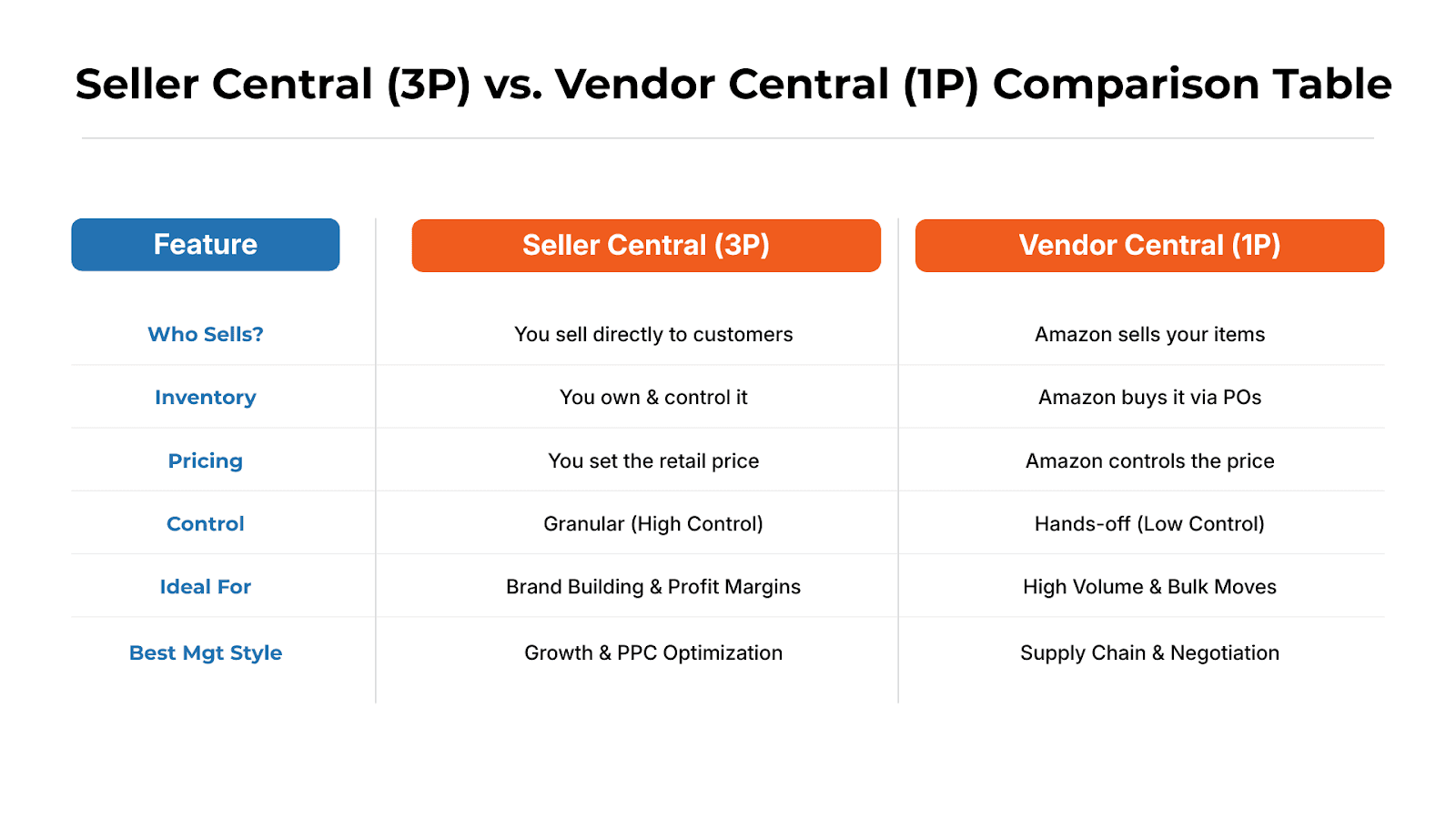
Before hiring help, you must define the arena you are playing in. It starts with the login. Most third-party sellers use the seller central login portal, which allows for direct-to-consumer sales. This differs from the Amazon Vendor Central login, which is used by manufacturers who sell wholesale directly to Amazon. Knowing which platform you are on dictates your management strategy.
Most management failures happen when agencies apply a 1P mindset to a 3P account—or vice versa.
2. Getting Started: Account Setup And Requirements
Even if you are already selling, like David, a professional management team will perform a "Foundation Audit" before they touch a single listing. They need to ensure the house is built on rock, not sand.
The "New" Status & Approval Timeline
If you are reading this as an aspiring seller, know that the Amazon seller account's new status is a probationary period. Amazon limits your storage space and holds your funds (often for 14+ days) to ensure you are legitimate.
Approval: Can take 24 hours to several weeks, depending on how cleanly your documents match (the "Exact Match" rule we discussed in our Compliance guide).
David’s Reality: Since David is established, his manager looks for "Grandfathered" issues—old settings or violations from his early days that might trigger a re-review if they start changing details now.
Choosing The Right Account Type: Individual vs. Professional
David started on the Individual Plan to save money. His first management advice? "Upgrade immediately." When looking at Amazon seller account types, the Professional plan is non-negotiable for scaling
Volume-Based Decisions: The math is simple. If you sell >40 items/month, the $39.99 Professional fee pays for itself (saving the $0.99/item fee). David sells 1,000+ units; staying Individual would cost him $1,000/month in fees.
Feature Access (The Dealbreaker): Only the Professional Plan allows for:
User Permissions: The ability to grant a manager access without giving them your main password.
Buy Box Eligibility: Essential for sales.
PPC Advertising: You cannot run ads on the Individual plan.
API Access: Required to connect software tools like ave7LIFT for monitoring.
Essential Compliance And Documentation
Before a management firm accepts David as a client, it will check his "Paper Trail."
Identity Verification: Is the account under "David Smith" or "ApexAuto LLC"? Discrepancies here are ticking time bombs.
Business Structure (LLC vs. Sole Prop): Managers prefer working with LLCs. It provides a "Corporate Veil," separating David’s personal assets (house, car) from liability if a car part he sells malfunctions.
Tax Interviews: Ensuring the EIN matches the IRS database is critical. A tax mismatch can pause the account right before Prime Day—a disaster a manager is hired to prevent.
For a step-by-step breakdown of how to open an Amazon seller account—and the exact documents required—Read Amazon Seller Account USA: Registration

3. Types Of Amazon Seller Account Management Service Models
David now knows he needs help, and his account is ready. However, upon examining the market, he is confused. Should he hire a freelancer? A big agency? Or use Amazon’s own expensive service?
Full-Service Agency vs. Hybrid Management Models
Full-Service Agency: This is the "Done-For-You" model. The agency handles logistics, creative, PPC, and customer service.
Pros: Total freedom for David.
Cons: High fees ($3k–$5k/month + % of sales) and loss of control. If the agency drops the ball, David won't know until sales tank.
Hybrid Model: This is the collaborative model. David retains control of his inventory and brand voice (the "Soul" of the business), while the partner handles the technical "Grind" (Growth and Optimization).
Why David Likes This: It pairs Automation (Defense) with Expertise (Offense). He uses software to monitor the account health 24/7, and brings in human experts only for high-level strategy or crisis management.
Freelance Consultants vs. Dedicated Management Firms
Freelancers: Often found on Upwork. Great for specific tasks (e.g., "Fix this one image").
Risk: Sellers who outsource PPC without oversight often discover budget overruns after the damage is done—highlighting why accountability and monitoring matter as much as execution.
Firms: A multi-disciplinary team. You get a graphic designer, a supply chain expert, and a strategist under one retainer. It is harder for a firm to "disappear" than for a freelancer.
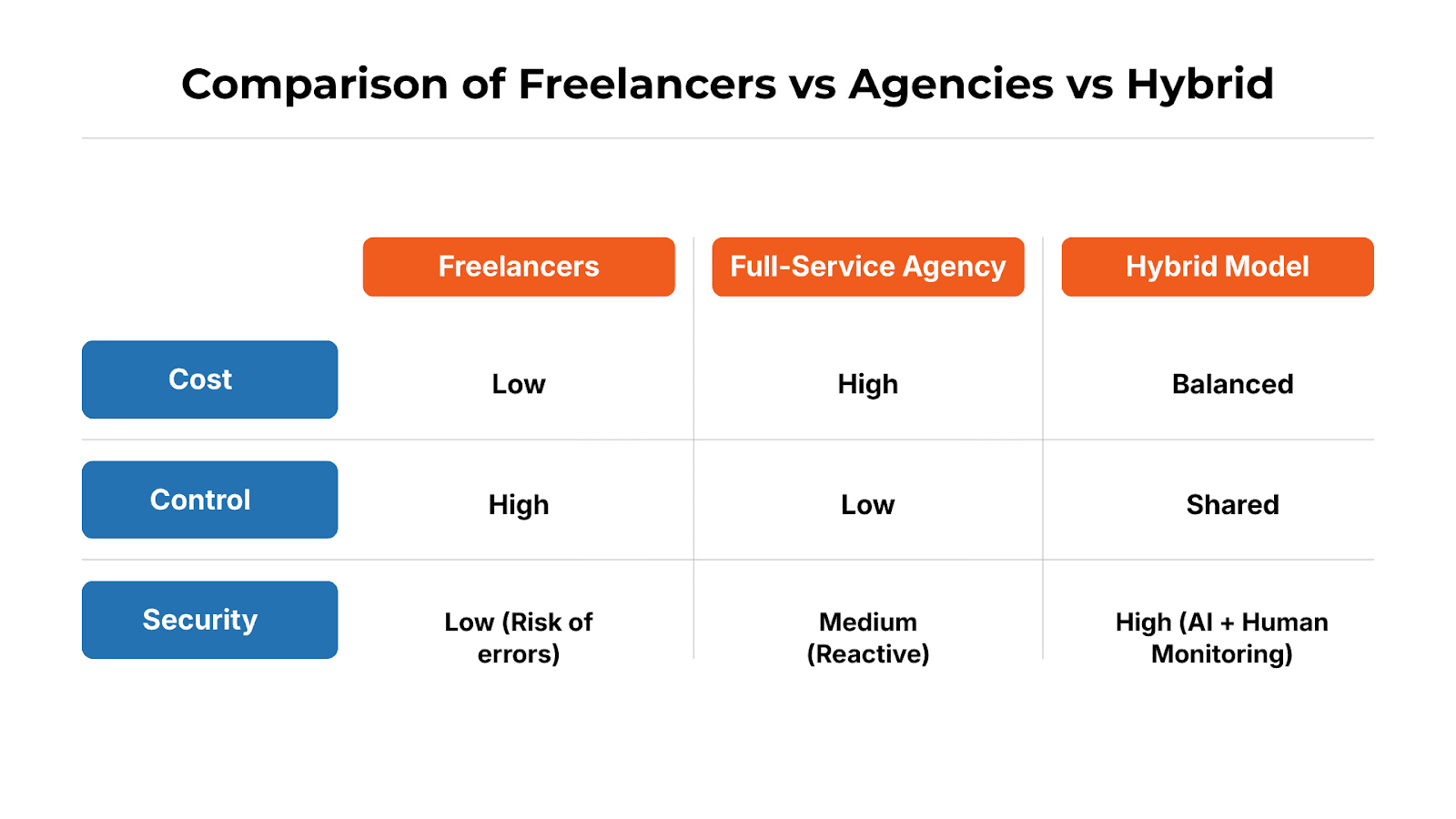
Critical Decision: Whether David hires a freelancer or a top-tier agency, he needs an independent way to verify they are doing their job. He shouldn't just trust their monthly reports.
Use ave7LIFT to monitor your account activity independently. It acts as an unbiased "Auditor," alerting you if your manager misses a critical health signal.
4. Account Health, Compliance, And Reinstatement
We have discussed Growth (SEO/PPC) and Operations (Logistics). Now we reach the foundation: Defense.
You can have the best PPC strategy in the world, but if your Account Health crashes, your revenue hits zero overnight.
Health Check: A management service performs a daily "Vital Signs" check. They don't just look for suspensions; they look for risk.
Deactivation vs. Suspension: Managers understand the nuance. A Deactivation might be a simple ID verification check. However, if the situation escalates, you may need specialized Amazon seller account deactivation services.
Account management often fails at the exact moment it’s needed most—during a suspension. Many agencies only react after Amazon shuts sales off. We’ve broken down the full recovery process, timelines, and appeal logic in our detailed guide: How to Recover an Amazon Seller Suspended Account. This resource explains what happens behind the scenes when Amazon restricts or suspends an account—and why prevention always costs less than recovery.
Comprehensive Account Audits And Gap Analysis
Policy Violations: A manager digs into the Account Health dashboard to find suppressed listings that aren't triggering a full suspension but are hurting the account's reputation score.
Competitor Analysis: Defense also means watching the enemy. Is a competitor using a forbidden claim ("Cures Cancer") to steal sales? A manager spots this and reports it to level the playing field.
Reinstatement Services And Appeal Management
This is the "Emergency Room." If David wakes up to a suspended account, the manager takes over.
Root Cause Analysis: They don't guess. They identify exactly why Amazon banned the account (e.g., "High Order Defect Rate due to late FBM shipments").
Plan of Action (POA): An expert Amazon seller appeal service drafts fact-based, emotionless POAs that get accepted faster.
The Reality Check: Most agencies only look at Account Health after something breaks.
ave7LIFT flips this model. We proactively monitor 35+ Amazon risk signals—from suppressed listings to rising defect rates—and alert you before Amazon takes action. This independent monitoring adds a critical second layer of defense, separate from day-to-day execution, so issues are caught early instead of becoming account-level threats.

5. Listing Optimization, SEO, And Creative Services
Listing optimization isn’t about ranking—it’s about preventing silent visibility loss.
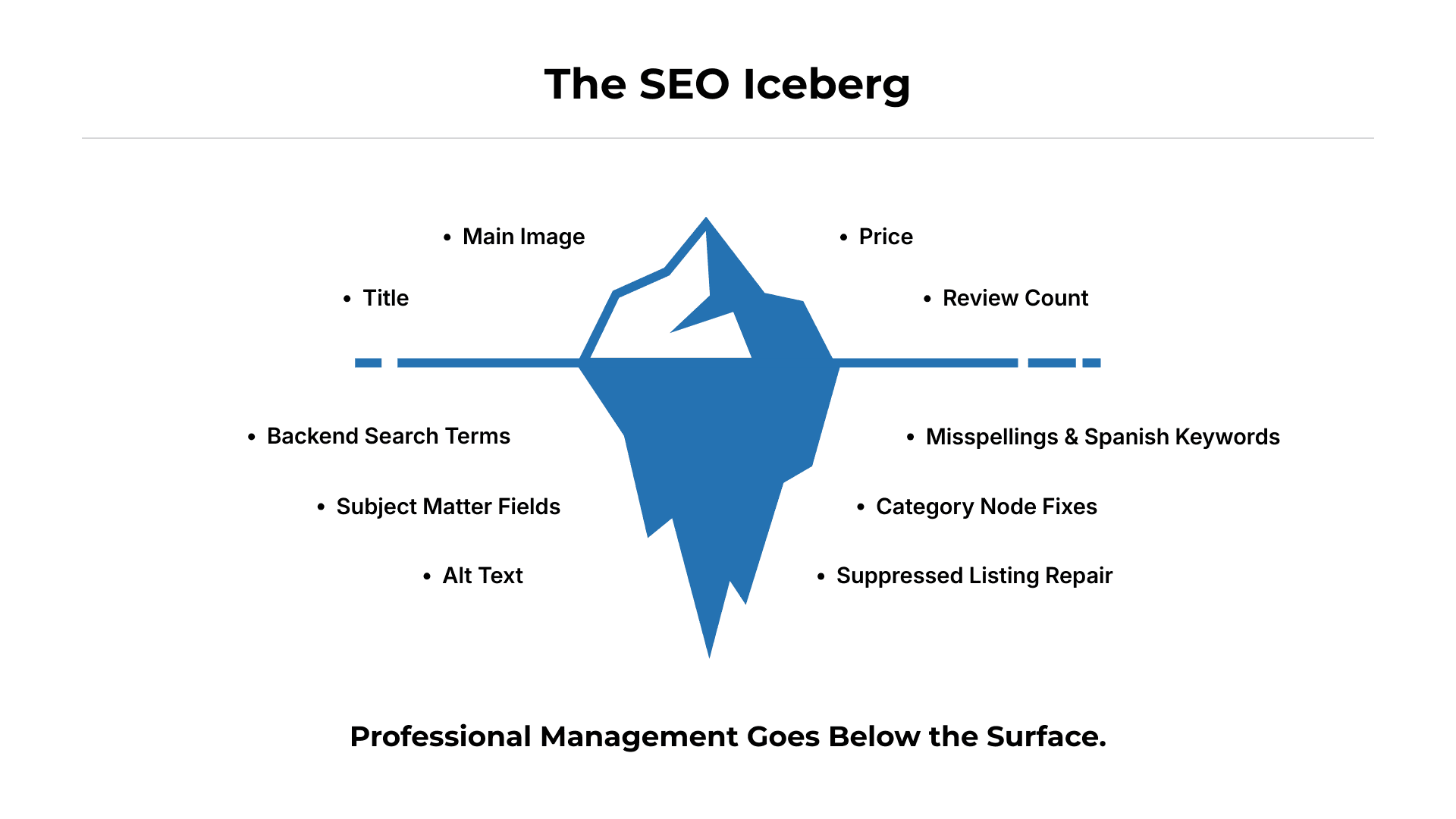
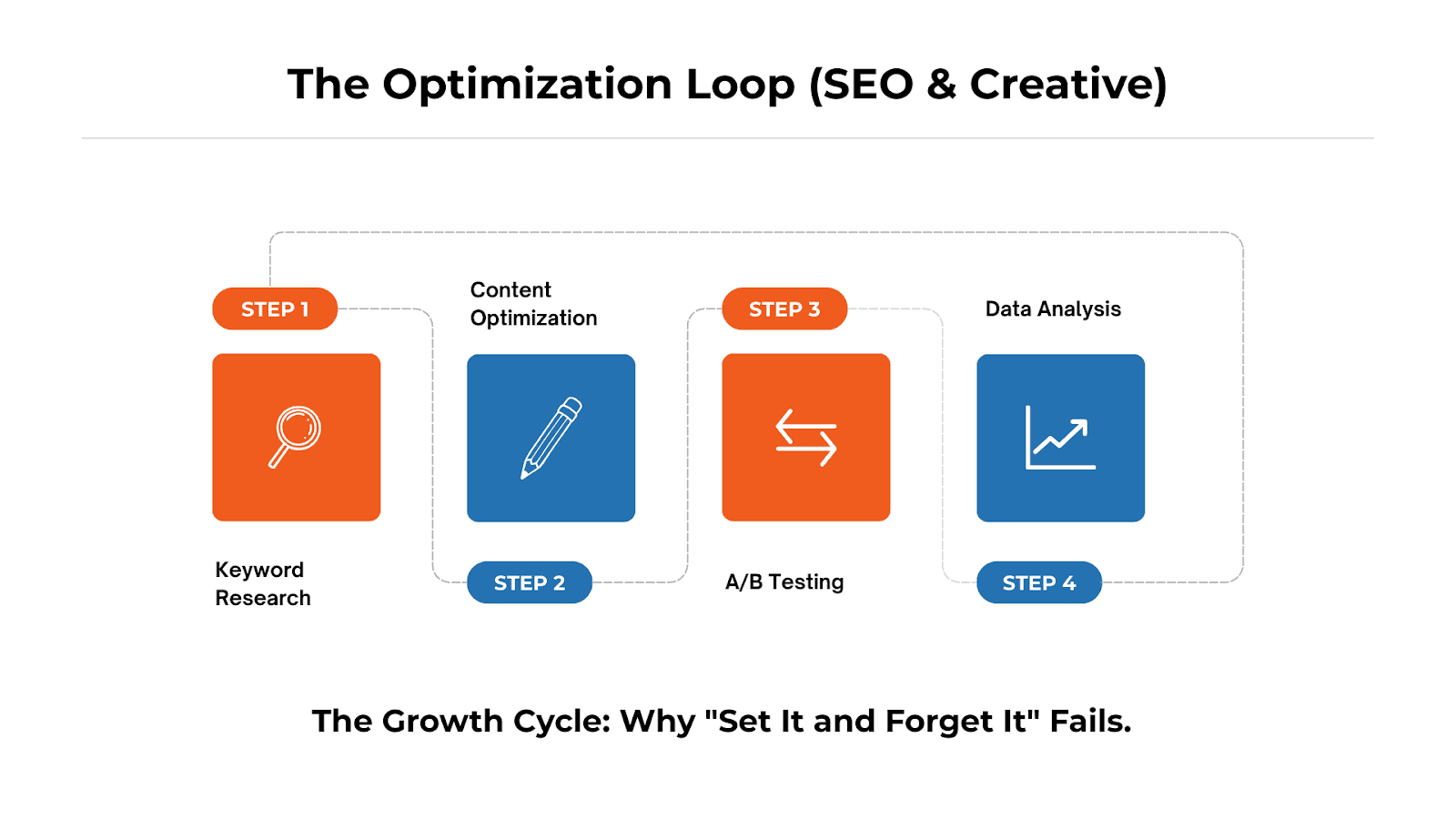
A professional account manager treats discoverability as an ongoing system—not a one-time task. Keyword strategy, images, and conversion elements must evolve with seasonality, competition, and algorithm updates. Listings that remain static lose visibility, even if sales were once stable.
Content Quality: It’s not just about keywords; it’s about conversion. David might have a great photo, but a manager will ask: "Does this infographic clearly explain how to install this car part?" If the answer is no, the manager coordinates with creative teams to redesign the asset, directly impacting the Conversion Rate (CVR).
Keyword Research And Organic Ranking Implementation
Backend Optimization: David was shocked to learn he was missing out on thousands of impressions because he had ignored the "Search Terms" field in the backend of Seller Central. Customers don’t see these words, but the algorithm reads them. A manager fills this "invisible real estate" with misspellings, Spanish translations, and synonym keywords to widen the net.
Continuous Updates: SEO is not static. When the season changes from winter to summer, search behavior for auto parts shifts. A proactive manager updates David’s keyword strategy before the trend peaks, not after.
A/B Testing And Conversion Rate Optimization
Manage Your Experiments: Amazon has a native tool called "Manage Your Experiments" (MYE). A manager doesn't guess which main image works best; they run a scientific test. They might pit David’s current "Product on White Background" image against a "Product with Packaging" image to see which generates more clicks.
Data Analysis: The manager interprets the data. If Image B increases sales by 4%, they implement it permanently. Over a year, that 4% compounding growth covers the cost of the management service itself.
6. Logistics: Handling FBA And FBM Operations
Marketing brings the sales; Logistics keeps the account open.
Fulfillment Strategy: Managers constantly evaluate the FBA (Fulfillment by Amazon) vs. FBM (Fulfillment by Merchant) equation. For David’s heavy automotive parts, FBA fees might be eating his margin. A manager might suggest switching specific SKUs to FBM to save costs, provided David’s warehouse can handle the shipping speed.
Supply Chain Streamlining: The manager oversees the shipment creation process, ensuring David sends inventory before he runs out of stock, preventing the dreaded "Stockout" that kills search ranking.
Optimizing Fulfillment By Amazon (FBA) Workflows
Shipment Creation: One labeling error can cause Amazon to reject an entire pallet. Managers handle the complex labeling requirements and "Box Content" information to ensure smooth reception at the fulfillment center.
Fee Auditing: This is often where managers pay for themselves. Amazon sometimes mis-measures a product, charging David for a "Large Oversize" tier instead of "Standard." A manager audits these fees and files reimbursement claims to get that money back.
Managing Inventory Performance Index (IPI) Scores
Sell-Through Optimization: If David has dead stock sitting in Amazon’s warehouse, his IPI Score drops. A low score leads to storage limits. A manager runs "Outlet Deals" or flash sales to liquidate stagnant inventory, protecting the IPI score.
Restock Limits: Amazon frequently changes how much inventory you are allowed to send in. A manager navigates these sudden policy shifts, planning shipments strategically so David is never blocked from restocking his best-sellers.

7. Analytics, Reporting, And Global Expansion
Advanced reporting in Amazon Seller Account Management exists to detect problems before revenue drops—not explain them afterward.
As Amazon operations grow more complex, visibility and compliance become just as important as sales. This section explains how advanced dashboards and localized expertise help sellers spot issues early and scale internationally without unnecessary risk.
Customizing Dashboards For Real-Time Tracking
Seller Central reports are clunky and disconnected. Professional services often build custom API dashboards that aggregate everything into a "Morning Coffee" view.
Key Metrics: They force David to look beyond "Gross Sales" (Vanity) and focus on "Unit Session Percentage" (How many visitors actually bought?) and "TACOS" (Total Advertising Cost of Sales).
Visualizations: Instead of raw CSV files, David gets a trend line. If his conversion rate dips from 12% to 9%, he sees it instantly on a graph, allowing his team to investigate a potential bad review or listing glitch immediately.
Navigating International Compliance And Localization
VAT & Taxes: Expanding to Europe isn't just about shipping boxes; it's about paying the government. VAT (Value Added Tax) is complex. Management services coordinate with tax professionals to ensure David is registered in the UK or EU before his first sale, preventing a tax-related suspension.
Localization (Not Translation): David thought he could use Google Translate for his German listings. His manager stopped him. "Auto parts" might translate literally, but German mechanics use specific technical slang. A manager uses native speakers to localize the listing, ensuring David sounds like a local expert, not a foreign tourist.
8. Account Management For Valuation And Exit Strategy
Strong Amazon account management directly influences your valuation and exit outcome. Buyers look for clean financials, controlled risk, and a Seller Central account that can transfer without friction.
Cleaning Financials For Acquisitions
Profitability Focus: When you are in "Growth Mode," you spend heavily on ads. When you are in "Exit Mode," you shift to "Profit Mode." A manager pivots the strategy 6–12 months before a sale to maximize EBITDA (Earnings Before Interest, Taxes, Depreciation, and Amortization), which is the number buyers use to value the company.
Expense Clarity: Buyers hate messy books. A manager ensures that every PPC dollar and FBA fee is accounted for in a clean P&L (Profit and Loss) statement, so due diligence takes weeks, not months.
Transferring Account Ownership
Legal Transfer: You can't just give the buyer your password. Amazon has a strict "Transfer of Account" process. A manager navigates the legal change of the "Primary User," ensuring the reviews and sales history transfer to the new entity without triggering a security lockout.
Asset Handoff: The manager packages up the intellectual property—the source files for logos, the supplier contracts, and the brand registry rights—ensuring a smooth handover.
9. Criteria For Selecting The Best Management Agency
David is convinced. He needs a partner. But the market is a minefield. For every legitimate agency, there are ten "gurus" promising overnight riches. How does David protect himself? He uses this Vetting Checklist.
Due Diligence: The "Trust But Verify" Protocol
Evaluating Case Studies And Reviews
|
Final Strategic Advice: Even with the best agency, you cannot abdicate responsibility. You are the owner. You need an independent way to verify your manager is doing their job.
Don't wait for the monthly report to find out your account health is degrading. Use ave7LIFT’s automated monitoring to audit your manager’s work in real-time. If they miss a suppression, you’ll know.
Conclusion
Amazon Seller Account Management is not about handing your business to someone else—it’s about building a system where growth and protection coexist. As David’s journey shows, scaling on Amazon turns your store into a high-risk digital asset. Revenue can grow fast, but so can exposure to policy changes, silent listing suppressions, wasted ad spend, and sudden suspensions. The real danger isn’t doing nothing—it’s outsourcing without visibility.
The safest path forward is a hybrid approach: retain ownership of your brand and inventory, leverage expert managers for execution and strategy, and back it all with independent oversight. This is where most sellers fail—and where ave7LIFT changes the equation. ave7LIFT acts as your always-on safety layer, monitoring critical account health signals, flagging risks before Amazon takes action, and giving you objective insight into what your managers may miss. It doesn’t replace human expertise; it enforces accountability and prevents single-point failure.
If you’re serious about scaling beyond founder-led chaos—without gambling your entire business on trust alone—Amazon Seller Account Management must be defensive by design. Growth is optional. Survival is not. ave7LIFT ensures you have both.
Summary
Amazon Seller Account Management services are expert-led systems designed to protect, stabilize, and scale Amazon businesses as operational complexity and risk increase. At scale, these services are less about delegation and more about defense—preventing listing suppression, policy violations, wasted ad spend, and sudden account restrictions that can halt revenue overnight.
These services manage all critical functions required to maintain seller presence on Amazon, including listing and catalog optimization (SEO, keywords, images, variations, A+ Content), advertising (PPC strategy and optimization), inventory and fulfillment (FBA and FBM), customer service and reviews, brand protection, analytics and reporting, and continuous account health and compliance monitoring. They operate through Amazon’s core systems—Seller Central, advertising platforms, Brand Registry, fulfillment infrastructure, and performance dashboards—to keep products searchable, buyable, and compliant.
Amazon Seller Account Management is used by new sellers establishing compliant foundations, growing SMBs scaling efficiently, and established brands focused on profitability, expansion, and valuation. The primary outcomes are reduced suspension risk, early detection of hidden issues, clearer operational visibility, and controlled growth. The most effective approaches combine expert execution with ongoing oversight, ensuring growth is supported by strong account health and durable presence—not blind trust or reactive fixes.
Frequently Asked Questions
More Insights from us